Author: Nuha Khan
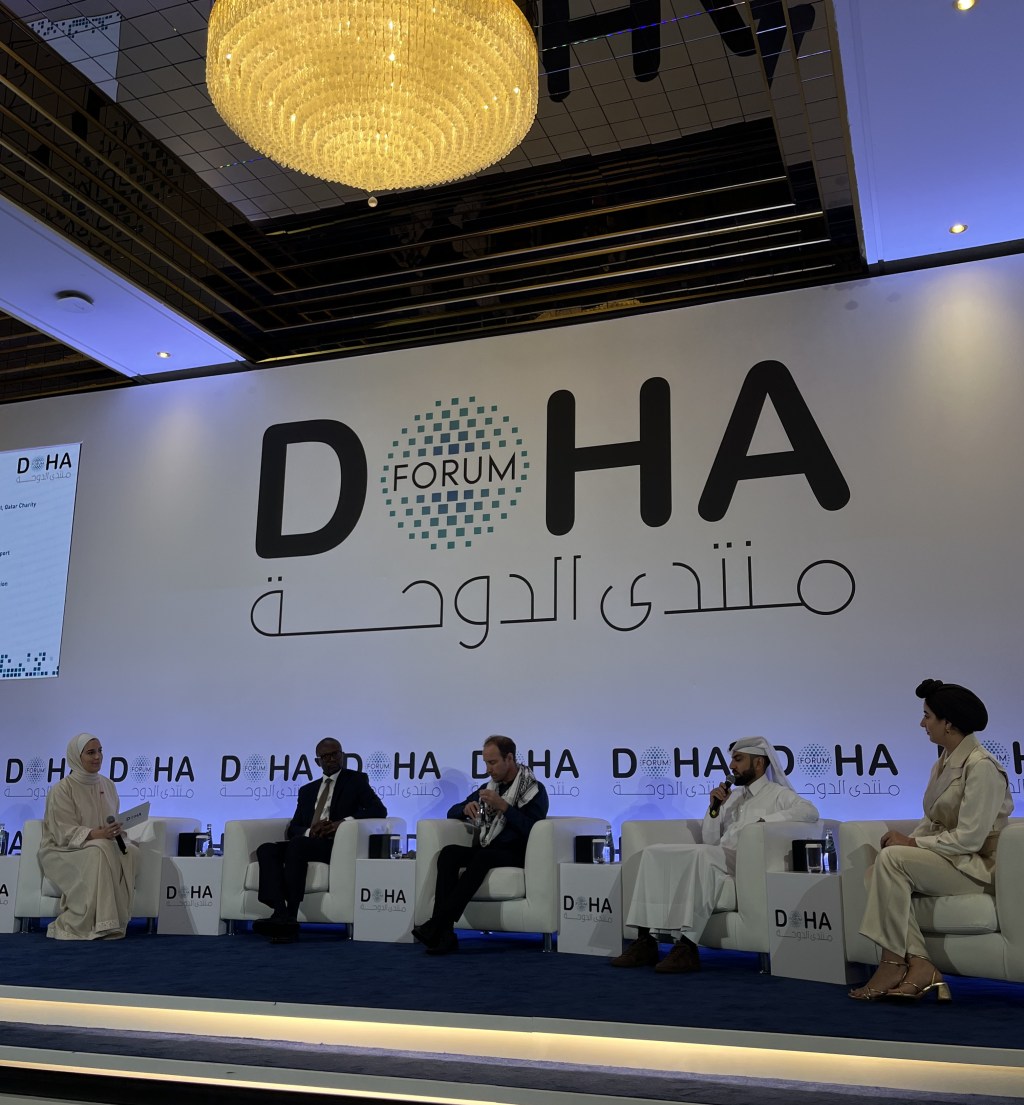
Since 2003, the Doha Forum has brought together thousands of leaders and thinkers from across the world to discuss pressing global issues. During the 2024 edition, held from December 7-8, over 4,600 participants, including 350 speakers convened to explore global issues under the theme of “The Innovation Imperative”. Innovative diplomacy and policy were surely displayed during the session on “Sport as a Force for Sustainable Development in the MENA Region”, moderated by Haneen Khatib. With Qatar having hosted the most technologically advanced edition of the FIFA World Cup, it is no surprise that the country is pioneering sports-driven development.
Sports is increasingly playing a role in propelling social development and cohesion. In his opening remarks, Ahmed Saad Al-Rumaihi, Manager of the Humanitarian Aid Department at the Qatar Fund for Development discussed the fund’s facilitation of various sporting programs across the MENA region to heal grievances among communities impacted by conflict, support healthy youth trajectory, and support female leadership. Part of this work is done in partnership with Generation Amazing (GA), a human and social legacy program created by Qatar’s Supreme Committee for Delivery & Legacy (SC). Nasser Al- Khori, the Executive Director of the Generation Amazing Foundation, illustrated how integral sports has become to youth-development policy.
During the panel, Al-Khori mentioned GA’s work in supporting over 1 million marginalized youth through initiatives including school programs, stadium building, and youth festivals — an incredible feat. A key factor in GA’s success is its commitment to tailoring its programs to its various audiences in over 40 countries. As Al-Khori stated, coaches are given modules to “do a needs analysis to understand the social issues of that community and design interventions”. These modules are publicly available, offering an open educational resource to anyone with internet access.
The panel session highlighted the criticality of cultural sensitivity in sports and youth development programs to ensure sustainability. Panelist Dr. Ben Farai Sanders, Executive Director of the International Platform on Sport and Development (sportanddev), carries out this principle as the organization provides all their educational content free of charge in Arabic, French, and English. According to Dr. Sanders, whose work has reached 197 countries, “the sector is too north driven, too anglo centric”, driving the need for outreach in local languages. Only then can audiences truly engage with development practices and be empowered.
Fatima Azzahra Benfares, the Program Director for Lead Morocco provided insights on the intersection of sports and education. According to Benfares, Lead Morocco utilizes sports “as a hook to encourage young students to stay in school” and promote leadership skills. She went on to state, “we believe that sustainable development can only happen if we have competent and empathetic leaders”. Investment in youth education through sports is a sustainable path to cultivating compassionate, intelligent future leaders.
Facilitating impactful youth development strategies through sports requires collaboration across sectors and borders. During the panel, Dr. Decius Chipande, head of the African Union Sports Council emphasized the importance of collaboration between governments and civil society organizations. Dr. Chipande stated the role of governments in incorporating sports development in national policies and funding such programs.
While Nasser Al-Khori noted the challenges in attracting funding, as the role of sports in vitalizing youth community engagement grows, both local organizations and large federations such as FIFA are increasingly eager to invest in the sector.
The Doha Forum’s “Sport as a Force for Sustainable Development in the MENA Region” session brought together leading individuals in the field who shared their perspectives on the power of sports. Most importantly, it is clear from this panel that sports serves as an innovative tool to reach, engage, and uplift marginalized communities. As some countries face violent conflict and others rapid modernizations, investment in youth education and empowerment is key to promoting and ensuring sustainable development within the MENA region.
 Goal Diplomacy