Author: Nuha Khan
With a 3-0 win over Oman, Jordan earned its place in the 2026 World Cup — marking the country’s first-ever qualification for the tournament. While qualifying for the World Cup is an accomplishment in itself, Jordan can leverage this historic spotlight on the global stage to both earn greater sporting recognition and encourage economic investment, cooperation, and development.
Economic Opportunity
As part of its Economic Modernization vision (EMV), Jordans seeks to increase economic growth, quality of life, and sustainability. To support these strategic objectives, Jordan can capitalize on its 2026 World Cup qualification to stimulate heightened bilateral and multilateral cooperation, attract foreign investment, and strengthen key sectors.
1. Tourism
“Destination”, one of the eight implementation drivers of the EMV, aims to develop the tourism sector, which currently accounts for 15% of Jordan’s GDP. However, around 75% of these tourists are Arab (including Jordanians in diaspora), highlighting the opportunity for broader, international reach.
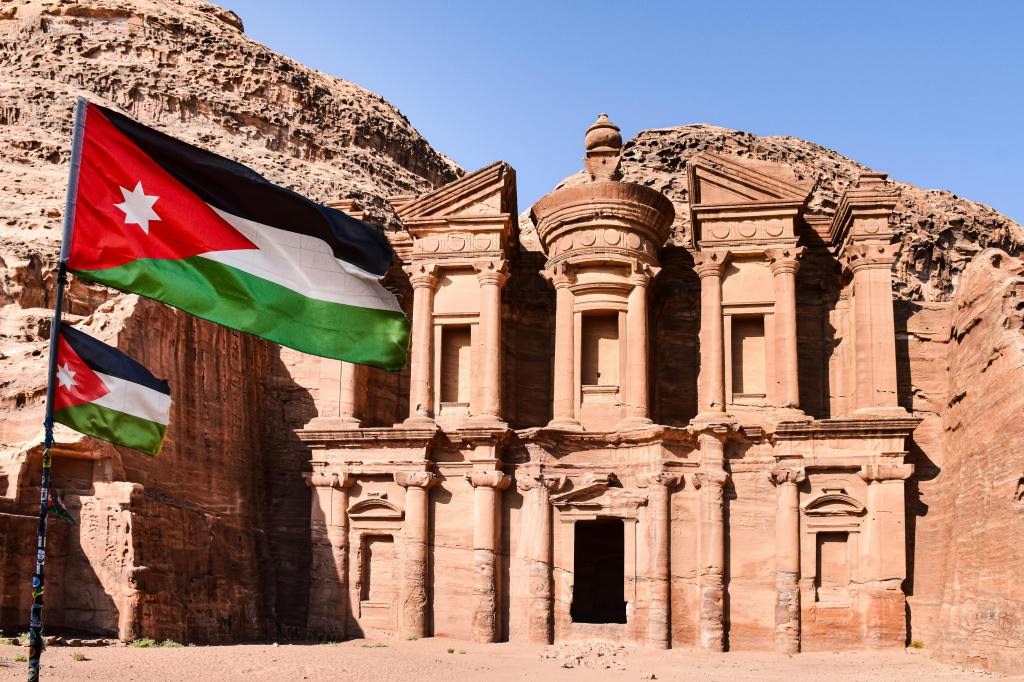
Despite boasting assets like six UNESCO World Heritage Sites and Petra, one of the Seven New Wonders of the World, Jordan still grapples with global awareness and perception challenges. Research shows that ‘geographical ignorance’ and biased media coverage leads many potential tourists to perceive Jordan as unsafe, despite its relative stability in a volatile region (Bani Issa, 2023). As former minister of tourism, Makram Mustafa Queisi, stated, “The problem is that people in the West and elsewhere, actually, when they look at the map, they don’t differentiate between Jordan and the neighboring countries. People don’t understand that we are not in a war zone” (Jaafari, 2023). Beyond the devastation in neighboring states, Jordan has strong domestic incentives to help end and mediate regional violence. To combat the misperception of danger, Jordan can utilize the 2026 World Cup to display an image of safety, hospitality, and cultural vibrancy to global audiences. In that respect, it can use this momentous opportunity to make an aggressive global push to state their case for safe and adventurous tourism.
Effective strategies may include broadcast advertising such as sideline boards and “visit Jordan” QR codes displayed during matches, along with official tourism partnerships with FIFA. Jordan’s Ministry of Tourism and Antiquities can also sponsor travel-influencer trips and launch athlete-ambassador campaigns featuring branded content filmed at sites like Petra, particularly aimed at targeting non-Arab countries.
2. Talent Export
As seen with countries like Morocco at the 2022 World Cup, strong performances on the global stage can drastically increase players’ market value and attract international scouting. With stars like Musa Al-Taamari rising, it is clear that Jordan is already able to produce world-class talent. In 2023, Al-Taamari joined Montpellier in France’s Ligue 1, becoming the first Jordanian to play in a top-five league. In February 2025, the right winger signed with higher ranking club Rennes for a reported €9 million transfer fee — clearly signaling Jordan’s growing presence in international football. By displaying their talent in North America next year, more Jordanian players can secure international contracts — increasing their transfer fees and encouraging remittances and greater investment flowing into Jordan.
3. Foreign Investment in Sports Infrastructure
Both the current spotlight and increased visibility during the 2026 World Cup can attract added foreign direct investment (FDI) to develop Jordan’s sports infrastructure, prompting job creation and capital inflow. Already, FIFA is assisting the Jordan Football Association (JFA) through constructing and upgrading national training centers. FIFA’s involvement and visibility at the World Cup can increase investor confidence in Jordan’s sports ecosystem. Qualification for the World Cup signals rising player quality, greater technical standards, and national interest, encouraging foreign companies to invest in training facilities, academies, and sports medicine standards. Additionally, foreign clubs may invest in building youth academies and creating talent pathways if they recognize a pipeline of undervalued talent worth developing in Jordan.
Conclusion
The 2026 World Cup will allow Jordan to display their growing athletic talent to global audiences, attract tourism, and encourage increased foreign trade and investment. Such prestige on the global stage will further reinforce the Arab world’s increasing relevance not only in the sporting arena but also in international affairs more broadly — producing world-class players and development opportunities capable of both transforming national teams and spurring economic growth.
Sources: Bani Issa, Mohammad Saleh. “Factors of Stability and Sustainable Development in Jordan in Its First Centenary (1921–2021): An Analytical Descriptive Study.” Heliyon, vol. 9, no. 8, 2023, e16773. Elsevier, https://doi.org/10.1016/j.heliyon.2023.e16773 Jaafari, Shirin. “’We Saw an Immediate Drop’: Jordan’s Tourism Industry Is Suffering Amid the Israel-Hamas War.” The World, 7 Dec. 2023, https://theworld.org/stories/2023/12/07/tourism-hit-hard-middle-east-countries-israel-hamas-war
 Goal Diplomacy