Authors: Nuha Khan and Isa Khan
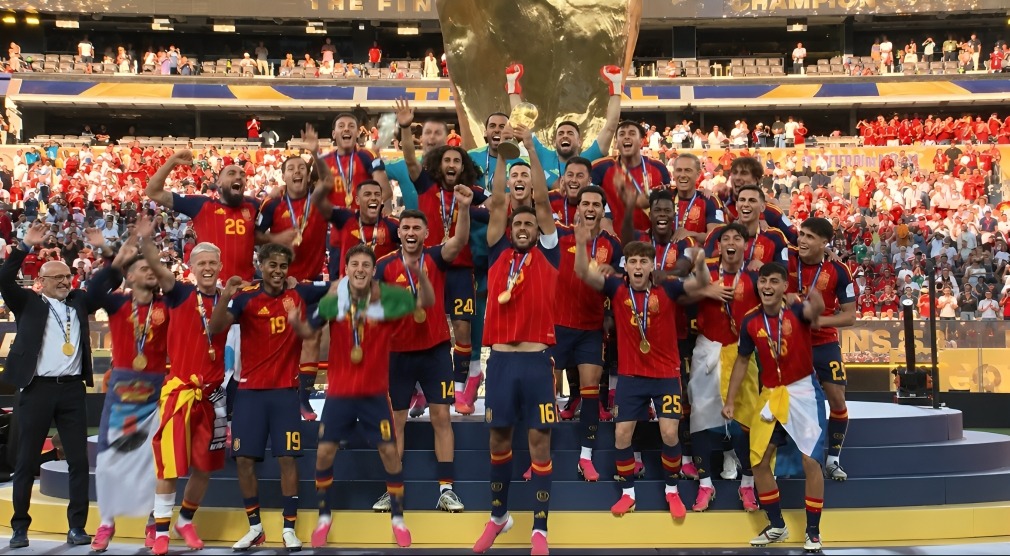
MetLife Stadium, New Jersey — On Sunday, July 19, 2026, Spain were crowned champions of the 2026 FIFA Men’s World Cup against Argentina. The match went overtime, and in this lopsided affair, Spain had 20 shots and 68% of the possession versus Argentina’s three and 32% respectively — a win that was clean and beyond convincing. Aside from Spain’s glory on the pitch, the final between the two sides appeared more than just a football match. As things unfolded, many across the world saw the match as a duel between Spain, a complete team embodying diversity, fair play, and strong morals versus Argentina, an arrogant team reflecting elitism, indecent aggression, and unsportsmanlike conduct.
Why So Many Neutral Fans Supported Spain
Online discussion trends and social media contents suggest that Spain had much wider support among neutral fans. While this is partly because of how disliked Argentina is, much of it can also be attributed to the Spanish team itself and what its players have come to symbolize. The Spanish team, also known as “La Roja” is composed of players from various ethnic, religious, and socioeconomic backgrounds, demonstrating the strength and success diversity can support. In fact, several of the team’s best talents were either born outside of Spain or are children of immigrants.
One such player is Lamine Yamal, a truly once-in-a-generation star athlete who has been crowned the Kopa Trophy’s world’s best player under 21 since 2024. Yamal, born to an Equatorial Guinean mother and Moroccan father, played key roles leading his team to win the UEFA Euro 2024 and now the FIFA World Cup 2026. The 19-years-old football sensation also happens to be among the nearly 2.5 million Muslims living in Spain.
Another sporting star in La Roja is Nico Williams, a child of Ghanaian parents who traveled Spain via foot through the Sahara desert while his mother was pregnant with him. Most inspiringly, it was Nico Williams who provided the masterful assist to Ferran Torres who scored the 106th-minute goal that ultimately earned Spain the World Cup trophy.
Yamal and Williams, both proudly vocal about their immigrant and humble backgrounds, highlight how diversity can uplift societies and help institutions attain greater success. Such players highlight the role of minorities, potentially encouraging greater social cohesion relaying the value of diversity to both Spanish and global audiences. As Nico Williams’s brother, Iñaki Williams, wrote to his brother on Instagram, “…you have allowed millions of Spaniards empathize with our story, which isn’t just ours but that of all the people who leave everything behind for a better future, because you’ve touched the sky with your fingertips and you’ve shown that with hard work and effort, anything is possible”. Fans across the world resonated with the different stories the Spanish players embodied, helping to garner global respect and support.
The Spanish national team has also gained global admiration due to its players’ stand on and/or solidarity toward various humanitarian issues across the world. After the World Cup final, Spain’s coach, Luis de la Fuente, stated, “In the past, people were surprised by footballers being talented and skilled and being good people. We are the most united team, and that is thanks to having people with solidarity and values”. International sensations like winger Lamine Yamal and goalkeeper Unai Simón have particularly been visible with their public support for humanitarian issues that resonate with millions globally. To this end, even the Spanish prime minister voiced support for and stood next to these players. Social media users and football followers worldwide overwhelmingly seemed to align with and admire these superstars’ shared common moral values and beliefs — further attracting neutral fans toward the Spanish National Football Team.
Argentina Seen as FIFA Royalty
South American heavyweights like Argentina have long dominated international football, historically enjoying the largest fan bases, selling the most merchandise, attracting the most ticket sales, and drawing in substantial revenue. But as the 2026 World Cup progressed, FIFA’s impartiality was in question while Argentina was labeled as football’s most protected brand.
Argentina’s opening match of the group stage against Algeria prompted discussion of what fans argued to be favoritism toward the South American side. During the game, Lionel Messi, the world’s third highest-paid athlete, aggressively kicked the back of Algerian defender Aïssa Mandi’s calf. Neither the referee or VAR (video assistant referee) deemed the foul worthy of a yellow or red card, triggering indignation among fans online who compared similar violations that led to yellow or red cards. As former German referee Patrick Ittrich stated, “By the letter of the law, that is a red. If I had seen it like that on the pitch, I would have shown red”. Similarly, On ESPN FC, commentator Ale Moreno said the incident was “100% a red card” and that such events “play into the narrative that great players get preferential treatment”.
As the tournament progressed, social media was flooded with annotated screenshots, time stamps, and fan commentary of moments Argentina seemed to be given greater leniency than other teams by referees. For example, when Argentina faced Cabo Verde, viral football content creators like Josh_Mufc89 took to Tiktok and Instagram to furiously highlight the double standards match officials seemed to place on the teams — one of which ranks #1 globally and the other #64.
Another prominent example of what viewers deemed as biased towards Argentina was their knockout game against Egypt. Most notably, during the game, Argentina was awarded a penalty while Egypt was not for nearly the exact same foul, showing inconsistency in how IFAB laws are applied to different teams. And in an earlier instance, a stunning goal by Egypt’s striker Zico was nullified using a questionable foul that took place 17 seconds earlier at the opposite end of the field as an excuse. As similar examples continued throughout the World Cup, fans essentially created digital files documenting what they called FIFA’s favoritism towards Argentina — spurring collective anger directed at the Argentinian team.
Argentina and Unsportsmanlike Conduct
Throughout the tournament, spectators also noticed Argentinian players unnecessarily fouling, hurting, and fighting their opponents — almost using physical intimidation as a strategy on the field. Social media users have repeatedly noted that Argentina seemed to be competing in MMA or wrestling rather than football. For example, during their semi-final game against England, Argentina players continuously tackled players with unnecessary force. A few instances include Enzo Fernández shoving England’s Elliot Anderson in the back of his neck, Argentina’s number 5 pushing Jude Bellingham to the ground without challenging for the ball, and Giuliano Simeone kicking the back of Anderson’s foot. While Argentina went on to win the match, what infuriated fans even more is how they celebrated. After the final whistle, Argentina players were seen excessively celebrating and shouting towards and on the faces of the England players. This was a stark contrast to how Spanish players celebrated their semi-final win against France the day before — remaining calm and consoling their French opponents. Such unsportsmanlike behavior from Argentina throughout the tournament contributed to their growing disapproval among many, especially the neutral fans.
A Shadow of Racism
Fans have also cited blatant racism among Argentina’s supporters as reason to oppose them. For example, during Argentina’s group-stage match against Cabo Verde, internet sensation IShowSpeed, who has over 50 million YouTube subscribers, 45 million Instagram followers, and 47 million on TikTok, was subjected to racist slurs hurled at him from many Argentinian fans in the stadium. The incident grew so out of hand that the issue dominated Tiktok search trends following the game. While FIFA have launched an investigation into the incident, the hate shown to IShowSpeed was just one example illustrating the prominence and severity of racism within the Argentinian fan base.
Racist rhetoric is not limited to the Argentinian fans as players have also been documented while exhibiting xenophobic behavior. For instance, during 2024 Copa América celebrations, Argentine player Enzo Fernández and several others took to Instagram live, where they sang a derogatory chant targeting French players of African descent, mocking their heritage. This event has remained with many football fans, proving to be more reason to root against Argentina.
Spain’s Victory Resonated With the Masses
Millions of football fans across the globe chose to support Spain against Argentina as they believed the European side to embody diversity, fair play, and strong morals. Conversely, Argentina was viewed as a team reflecting the established power structures within football, unsportsmanlike conduct, and racism. Due to the criticism surrounding Argentina’s perceived preferential treatment, for many, the team came to represent everything wrong in football’s existing power hierarchy. The aggression shown by Argentine players continued to push neutral fans away and eventually led to phrases such as “anyone but Argentina” gaining traction on social media. Strong aversion to Argentina is one reason their opponent gained support. But more than this, coming into the tournament, Spain had established a favorable reputation among fans. The inclusion, good sportsmanship, and strong values demonstrated by the Spanish team drove millions of international neutral fans to vehemently support them in the World Cup final.
The strong support for Spain worldwide demonstrated the greatest power of football: to unite people of all different backgrounds and identities for a common cause. When Spain had decisively beaten Argentina, it seemed as if almost all of social media was rejoicing, celebrating both a team that reflects values held by the masses and the defeat of a team that, to many, represents the arrogant elite within sport. And as if to prove their critics correct, Argentina started the most aggressive brawl this 2026 tournament had seen with one of its players grabbing a Spanish players’ neck while its coaching staff physically attacked another Spanish player, leading to even more altercations. Moreover, as the Spanish squad lifted the World Cup trophy, the Argentinian team turned their back to the stage, further displaying their unsportsmanlike practices.
Conclusion
Ultimately, the 2026 World Cup Final between Spain and Argentina proved that even in sport, the masses will choose to support those who most closely represent their values while rejecting those who seem to undermine them. The global support for Spain illustrated the role of sport in uniting the people globally to support values of diversity, good sportsmanship, and moral principle while rejecting a team that many believed reflected arrogance, unfair play, and racism.

