Author: Nuha Khan
Ceuta: When a Shirt Becomes Political
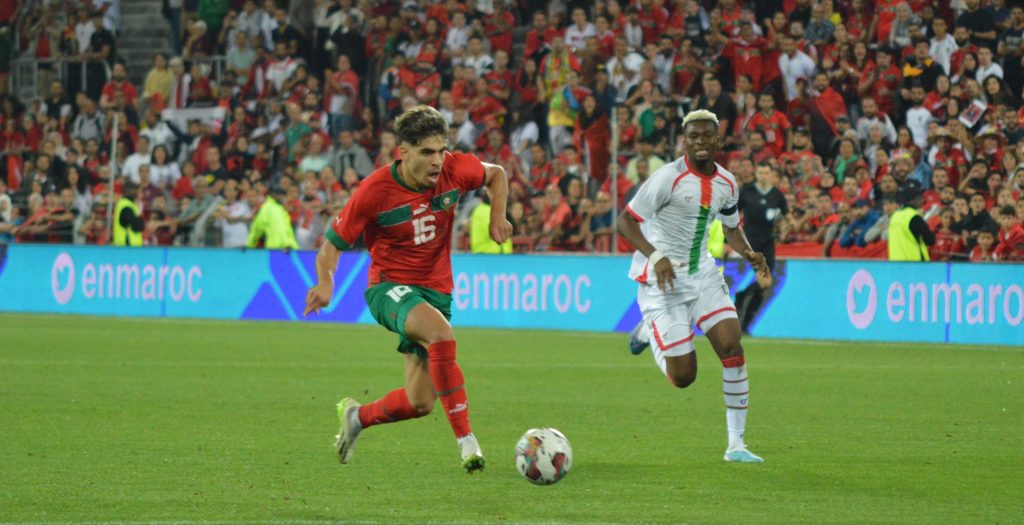
On September 14, ahead of their La Liga match, Villarreal CF and Real Betis Balompié players entered the pitch wearing shirts bearing the message “Todos somos caballas” (“We are all mackerels”). Mackerel is a nickname for the people of Ceuta, a Spanish enclave that saw an unprecedented surge of migration from Morocco in July 2026. Not long after kickoff, Moroccan Betis player Abde Ezzalzouli was lambasted online for seemingly betraying his country of origin.
Two days later, Real Madrid and Elche players also wore shirts with the same slogan. However, three Madrid players, Kylian Mbappé, Vinícius Júnior and Ibrahima Konaté, obscured the messaging with the first two rolling their shirts up and the latter simply holding it in his hand. La Liga president Javier Tebas went on to criticize the players, stating their actions were “very wrong”.
The t-shirt initiative, organized by the Valencia Association of Entrepreneurs, resonated with various audiences in vastly different ways, with some viewing it as a show of support for Spain or a humanitarian cause and others as an attack against Moroccans. Regardless of their stance, reactions towards the t-shirts demonstrate how actions on the football pitch can reflect broader issues of identity politics and international relations. It is most interesting to explore this intersection by analyzing the case of Abde Ezzalzouli, including the backlash he faced, and his resulting response.
Quick Background on Ceuta
Ceuta is one of two Spanish enclaves located on the coast of Morocco. While Spain has controlled Ceuta since 1580, Morocco rejects this, claims the territory as theirs, and views Spain as an occupier. This contention has been the backdrop for highly politicized discourse surrounding migration from Morocco to Ceuta, including large waves in 2021 and 2022. Despite past surges in migration, no crisis had hit the enclave as suddenly and calamitously as the July 30-31, 2026 migration crisis, with nearly 72,000 arriving in Ceuta within 48 hours. Most of these migrants arrived by foot or swimming from Morocco, with over 140 people dying during the journey. While most of the migrants returned to Morocco almost immediately, an estimated 10,000 still remain in Ceuta. The incident and its aftermath severely strained resources in the 7.2 square mile (18.5 square kilometers) enclave, which already had 80,000 residents.
The migrant crisis has been weaponized by the far-right in Spain and EU, labeling the event as an “invasion”. With the crisis becoming incredibly politically charged, voices on all sides of the issue have faced harsh criticism. Footballers in Spain have come to reflect the discord and polarization surrounding the issue.
Ezzalzouli and the Politics of Identity
Born in Morocco but raised in Spain, Abde Ezzalzouli demonstrates the complexity of identity politics and the implicit role footballers play in embodying global affairs. For many Moroccans, Ezzalzouli wearing the “We are all mackerels” (also translated to “We are all Ceuta”) signaled support for Spanish control over the territory and disrespect towards Morocco. Ezzalzouli’s social media comments were flooded with insults and threats including, “Betraying the homeland is not a passing stance, but a disgrace that remains in the memory of history. The homeland is not for sale, and whoever sells it loses respect before he loses his homeland”; “Whether you like it or not, Ceuta and Melilla are Moroccan, and they will always remain so”; and “Go educate yourself about the history of your country before you speak about anything”.
Ezzalzouli, who has played for the Moroccan National Team since 2022, responded on Instagram by writing, “At no point was the shirt referring to the people of Ceuta used with a political purpose or as a sign of disrespect toward my people, the Moroccan people … It was a shirt with a social purpose, intended to support a community”. The 24-year-old went on to state, “That said, this is not an apology to anyone, and anyone who wishes to use this to question my love for my country is free to do so. I will continue to live each day with my head held high.”
The migrant crisis in Ceuta has been labeled a humanitarian issue by bodies such as Human Rights Watch, suggesting that politics aside, the issue can be analyzed through a humanitarian lens. As these organizations explain, both migrants and locals in Ceuta were facing a volatile situation.
Because EU far-right political figures weaponized the issue, while certain Moroccan audiences have fixated on territorial claims, interpreting the Ceuta crisis as either a political or humanitarian issue is deeply complex. Political narratives surrounding Ceuta have flared fears among locals that can turn into hatred towards and violence against migrants. Given this, shirts stating “We are all mackerels” can further provoke xenophobia and further marginalization of migrants.
In an interview with Spanish newspaper Diario AS, Kylian Mbappé explained his reasoning for not fully wearing the Ceuta t-shirt by stating, “I want to say is that I stand in full solidarity with Ceuta and all the victims…But I also wanted to acknowledge and show support for all the migrants who’ve lost their lives and those who face harsh conditions…Ultimately, I’m human, and I don’t want to prioritize one form of suffering over another.” While his actions, and those of Vinícius and Konaté, were condemned by many Spanish spectators and the La Liga president, some Moroccan audiences praised the Madrid stars’ defiance. Social media users shared their disappointment in Ezzalzouli by contrasting him with the Real Madrid players, with one user captioning a post with “the foreigner vs the countryman”, seeking to shame the Moroccan player.
The reactions to Mbappé’s and Ezzalzouli’s differing roles in the campaign show that often, footballers do not completely control the meaning of their actions. Instead, audiences interpret their acts through their own existing political, social, and identity perceptions. With regards to Ezzalzouli, some Moroccan fans believe their geopolitical understanding should be represented through the player given their shared national identity. When such preconceived expectations are not met, players can become subject to criticism and scrutiny stemming from identity politics.
When Footballers Become International Affairs Actors
A footballer’s seemingly small action of wearing (or not wearing) a t-shirt can be interpreted to have controversial geopolitical meanings. Because players operate a globalized football system, often have ties to several countries, and attract enormous public visibility, they can become symbols in political debates even when they do not intend to. The questions regarding the Ceuta t-shirts are less about whether Ezzalzouli was right or wrong and more about the impact of a footballer’s actions. Ezzalzouli’s actions can be interpreted as expressing solidarity with Spain, showing humanitarian solidarity with residents, or simply participating in a club-wide initiative — showing how difficult it is to assign political meaning to a player’s actions.
When discussing the controversy surrounding the Ceuta-solidarity shirts, La Liga president Tebas stated that such initiatives are “an institutional act, a club act” and not “a personal act in which one has to express an opinion”, suggesting that players have a responsibility to take part in such collective actions. While Ezzalzouli explained that he would not apologize for taking part, it undoubtedly places pressure on players when they receive direction from higher authorities to participate in initiatives. While players like Mbappé felt empowered enough to defy this, it is important to consider athletes’ limits to objecting club decisions.
The Limits of a Footballer’s Symbolism
Whether a footballer’s action is deemed political depends on the three actors: the institution, the player, and the audience. Regarding the Ceuta shirts, La Liga’s president claimed it was an institutional act that should not be subject to personal opinions, Ezzalzouli maintains it was a social/humanitarian stance, and some Moroccan audiences argue it was an attack on Morocco’s sovereignty. Given these clashing variables, it is possible for initiatives like the Ceuta shirts to generate controversy and illustrate how a player’s actions can take on vastly different meanings.
Often, audiences place more meaning that intended onto footballers on the international stage. While it’s quite simple for online audiences to take to social media to bash and threaten footballers, the identity politics that international players embody is far more complex. Are players expected to avoid all mention of social and humanitarian issues that are weaponized by some for political agendas? The controversy surrounding the Ceuta shirts ultimately demonstrates the limitations of treating footballers as straightforward representatives of a single nation, political identity, or community. While Ezzalzouli is Moroccan, he, like most other players, also plays in an increasingly globalized sporting framework, in which nationality, upbringing, and club affiliations all intersect. Footballers will continue to find themselves and their actions at the intersection of politics, sport, and identity. In the case of Abde Ezzalzouli, his participation in the Ceuta shirt initiative took on vastly different meanings for various audiences and this complexity is the very reason football can be such a powerful representation of international affairs.

